Traversate oceaniche
Pacific Puddle Jump
Circa 3000 miglia dal Messico o da Panama alle Marchesi, attraverso le calme equatoriali fino agli alisei costanti e al primo approdo nel Pacifico del Sud tropicale.
13 episodi sulla carta
- Distanza
- circa 2700–3000 M dal Messico; circa 3000–3100 M dalle Galápagos (le fonti non concordano); circa 4000 M da Panama
- Durata tipica
- circa 18–25 giorni di mare dal Messico
- Stagione / mesi migliori
- Partenze da febbraio ad aprile (soprattutto a marzo); arrivi da marzo a maggio
- Venti dominanti
- Venti leggeri al largo del Messico, ZCIT instabile vicino all’equatore, poi alisei da SE di 15–25 kn
- Partenza / arrivo
- dalla Baia di Banderas (Messico), da Panama o dalle Galápagos a Hiva Oa / Nuku Hiva, Polinesia francese
- Dimensioni della flotta
- più di 100 barche in un anno tipico (nella migrazione del 2018 se ne sono contate oltre 100)
Il Pacific Puddle Jump, il «salto della pozzanghera», è la migrazione annuale delle barche da crociera dalle Americhe alla Polinesia francese. È informale, né regata né rally, e la rivista Latitude 38 la segue dagli anni Novanta. Quasi tutte le barche partono dalla Baia di Banderas, in Messico. Altre partono da Panama (circa 4000 miglia fino alle Marchesi) o dalle Galápagos (circa 3000 miglia). Il primo approdo abituale è Hiva Oa o Nuku Hiva, nelle Marchesi.
Di solito si parte tra febbraio e aprile e si impiegano 18–25 giorni, arrivando tra marzo e maggio. Si esce dal Messico con arie leggere, si attraversa la zona di convergenza intertropicale con i suoi groppi e le sue calme, e si finisce con circa due settimane di alisei da sud-est di 15–25 nodi.
Per la maggior parte dei diportisti è una delle traversate senza scalo più lunghe della loro vita. Il fascino sta nel taglio netto tra continenti e culture. La difficoltà sta nella scelta della rotta attraverso la ZCIT, nelle settimane al largo e nella lontananza da qualsiasi riparo o aiuto.
Punti salienti
- Il passaggio dell’equatore a vela
- Approdo alle Marchesi: Hiva Oa o Nuku Hiva
- Le feste di saluto a Puerto Vallarta e a Panama
- La porta d’accesso ai cinque arcipelaghi della Polinesia francese
Da tenere d’occhio
- Le calme e i groppi della ZCIT possono costare giorni
- Se parti troppo tardi rischi di entrare nella stagione dei cicloni tropicali
- Settimane senza possibilità di scalo o di soccorso
- Le formalità d’ingresso in Polinesia francese cambiano a seconda della nazionalità: verificale prima di partire
Episodi su questa rotta 13
-

29 days sailing Panama to French Polynesia the whole passage
Marquesas Islands Polinesia Francese
This is our whole pacific crossing in one video it's a long one so get comfy and join us as we sail across the biggest ocean on earth. Cheers everyone for watching!!
-
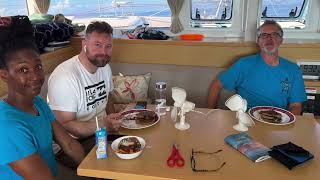
Pacific Crossing ITCZ to Hiva Oa
Atuona Hiva Oa, Polinesia Francese
The second half of our Pacific Crossing from San Diego to the Marquesas Islands. In April 2026 we set out from San Diego in our Lagoon 400 catamaran Seachelle, and sailed non-stop to Atuona on Hiva Oa island.
-
Our Strangest Shark Encounter so far 🦈 (EP024)
Hiva Oa Isole Marchesi, Polinesia Francese
In the last episode, we spent nearly 11 unforgettable days exploring the Marquesas Islands and were blown away from the moment we made landfall in Fatu Hiva.
-

Life After Landfall | Exploring the Marquesas Following Our Pacific Crossing
After crossing more than 3,000 miles of Pacific Ocean, we finally had a chance to slow down and enjoy life in the Marquesas Islands. But life after landfall isn't just tropical anchorages and waterfalls.
-

⛵ After 17 Days at Sea - This Island Doesn't Feel Real ⛰️ (EP023)
Fatu Hiva Isole Marchesi, Polinesia Francese
After 17 days at sea, we’ve finally arrived in paradise 🌴✨ Fatu Hiva feels like something straight out of Jurassic Park — towering cliffs, lush jungle, tropical fruits everywhere, and some of the kindest people we’ve met on our …
-

Eventually, Life in the Pacific Felt Normal
Marquesas Islands Polinesia Francese
Eventually, life in the Pacific started to feel normal. After more than a week at sea crossing the Pacific Ocean, the routines of offshore life slowly began to settle in.
-

3000 Miles Across the Pacific – Sailing to French Polynesia 🌊⛵🌴 (EP022)
Fatu Hiva Isole Marchesi, Polinesia Francese
After our unforgettable time on the Galápagos Islands, the greatest adventure of our journey begins — crossing the mighty Pacific Ocean.
-

This Is It. We’re Crossing the Pacific
Marquesas Islands Polinesia Francese
We’re finally doing it. After months of preparation, we’re leaving the Galápagos and setting sail across the Pacific Ocean — 3,000 nautical miles to the Marquesas. This is the moment everything has been building toward.
-

I sailed SOLO from Panama to French Polynesia! I made it! [ep 166]
Marquesas Islands Polinesia Francese
Crossing the Pacific Ocean is something I have always dreamed about. This week, after 4,088 miles and 28 days alone at sea with my cat, Mako, I made it to French Polynesia!
-

South Pacific Crossing 2 | E052
Marquesas Islands Polinesia Francese
@yachtzenagain6877 completes her 4500 mile passage sailing across the Pacific Ocean from Panama to French Polynesia.
-

Up the mast alone at sea on my PACIFIC CROSSING [ep 163]
There are times when I wish there was someone to help me on my sails.. these days were those.
-

Boobies - to Love or Not to Love
Marquesas Islands Polinesia Francese
I LOVE BOOBIES… But the Captain’s Had Enough! 😆🐦⛵ Join us as we set sail from the Galápagos to the Marquesas — with an unexpected (and very enthusiastic) stowaway: a red-footed booby we named Brad.
-

REACHING LAND AFTER 20 DAYS AT SEA - Galapagos to Marquesas, French Polynesia 3000nm /5400km - Ep 42
Marquesas Islands Polinesia Francese
After 20 days at sea, the crew of Stardate finally arrive in French Polynesia. But before reaching our destination, there’s still plenty of work to be done.
Equipaggi su questa rotta
Continua a leggere
- Latitude 38: Puddle Jumpers Prepare to Pounce
- KeelIndex: Pacific Puddle Jump
- Sail-World: Cruising the Pacific, the Coconut Milk Run
Un riassunto per imparare e sognare, non per navigare. Regole, tariffe, stagioni e avvisi di sicurezza cambiano: prima di partire controlla le fonti ufficiali aggiornate.